About
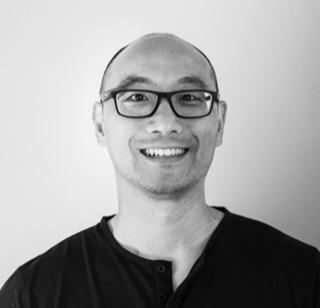
I'm a product executive, entrepreneur, and a recovering engineer. I've spent more than 20 years working across software sales, marketing, product management, and company building. Mostly in B2B SaaS, mostly with startups, and almost always trying to figure out how to make something better.
My career hasn't exactly followed a straight line. And that's probably a good thing.
- Engineering
- Personal trainer
- Sales
- Marketing
- Product
- Executive
I have an engineering degree, although I used to joke that I was the world's worst engineer. C++ and Assembly never felt particularly natural to me. After graduating, I struggled through technical interviews before eventually taking a job as a personal trainer.
It was there that a client suggested I try software sales. He thought I'd be a good communicator. He was right.
What surprised me was that sales didn't feel like abandoning engineering. It was engineering, just in a different domain. I was still using systems thinking, pattern recognition, and strategic problem-solving. I just happened to be working with people and businesses instead of code.
That discovery changed the direction of my career.
Better questions, not better pitches
Over time, I figured out that my greatest professional strength wasn't a particular discipline or technical skill. It was intellectual curiosity.
I learned that listening and asking questions helped me understand things, and more importantly, understand people. Better questions, not better pitches, turned out to be the secret.
That skill followed me from sales into marketing, product management, and eventually executive leadership. The titles changed, but the underlying approach didn't.
I'm particularly interested in understanding the foundational problem behind a business or product challenge. Does this sound familiar? Have I seen something like this somewhere else? Is there a better way to approach it?
There are very few truly unique problems. More often, there are problems that have already been solved in another domain, but those solutions haven't yet been applied to yours.
One of my favourite examples is Honeybee Benefits, where the founding team and I built a digital marketplace for insurance and wellness benefits. We all came from digital advertising, where we'd worked with ad networks and marketplace models.
It turned out that the mechanics of designing a remnant advertising exchange had a surprising amount of overlap with the workflows needed to build a benefits marketplace.
That experience gave us a different way of looking at the problem, and a meaningful innovation advantage over incumbents who had spent their careers working exclusively within the insurance industry.
It's a pattern I've looked for ever since: find the underlying problem, challenge the conventional assumptions, and borrow good ideas from unexpected places.
Building products and building teams
My approach to product is relatively simple. Start with the problem, not the solution. Get close to the people experiencing it. Challenge your assumptions. Look for the signal before investing heavily in the build.
I'm a big believer in starting small, learning quickly, and earning the right to build more. Particularly in the world of AI, where it's never been easier to build something impressive that nobody actually needs.
Great products are rarely the result of one person's brilliance. They're the result of talented people working together, asking good questions, and having the freedom to challenge each other's thinking.
My leadership philosophy comes from my dad:
Don't ask of others anything you wouldn't do yourself. Lead by example. And try to hire people who could be your boss one day.
I've always liked that last part. The goal isn't to build a team that needs you to have all the answers. It's to build a team full of people who are capable of coming up with better ones.
A few things I've learned along the way
I've been fortunate to work across a pretty diverse set of businesses and challenges.
Forewards
Co-founder · Shut down
As co-founder, I learned firsthand what it takes to bootstrap a software business, find customers, and confront the uncomfortable realities of product-market fit.
Read: Why Growth Can Be a Leading Indicator of Failure →Honeybee Benefits
350% growth · Acquired by Green Shield Canada
I helped build a digital marketplace that brought a different model to the employee benefits industry. The company grew 350% year over year before being acquired by Green Shield Canada. It taught me that it's always too early until it's too late.
Read: I've Seen This Movie Before →Uberflip
$20M+ ARR · Acquired
I led product and cross-functional teams through a period of significant growth, helping scale the business beyond $20M in ARR before its acquisition. The biggest lesson: your customer changes even when your dashboards say they haven't. Stability isn't always signal.
Read: When the Product Is Fine and Everything Is Still Broken →Koru Ventures
CPO · Zero to one
As CPO, I helped build AI-native B2B SaaS businesses from zero to one, including BillieAI, an AI-powered legal bill review platform. AI made it faster than ever to build. It didn't make it any faster to learn what customers actually needed.
Read: The Signal-First v0 playbook →Property Vista
VP Product · Now
Today, as VP of Product, I'm helping a software company with 15 years in property management define its agentic AI future. The hard part isn't the AI. It's deciding which work agents should take off a team's plate, so people can spend more time on the work only people can do.
Across those experiences, I've worked at the intersection of product strategy, technology, go-to-market, and company building, with businesses at every stage from early idea to acquisition.
I've also made plenty of mistakes along the way. Some expensive. Some educational. Occasionally both.
The journey is the fun part
One thing I've come to appreciate is that the journey is the fun part. And it's also the only part where you really have control.
You can't control the market, the timing, the competition, or whether an outcome ultimately works out the way you hoped. You can control the questions you ask, the decisions you make, the people you surround yourself with, and how much you learn along the way.
I still enjoy figuring things out. I like complicated problems, unconventional ideas, and working with people who aren't afraid to challenge the status quo.
I'm based in Toronto. By day, I lead product at Property Vista. Alongside that, I work with a small number of founders and teams on what to build, how to build it, and how to turn it into a business. Sometimes that's product leadership. Sometimes it's AI strategy. Sometimes it's just a second set of eyes on a hard problem.
I have a few more swings left in me.
They might be my own, or I might be helping someone else take theirs.
Say hello
I'm always open to smart conversations and good startup problems. Email me or find me on LinkedIn.